
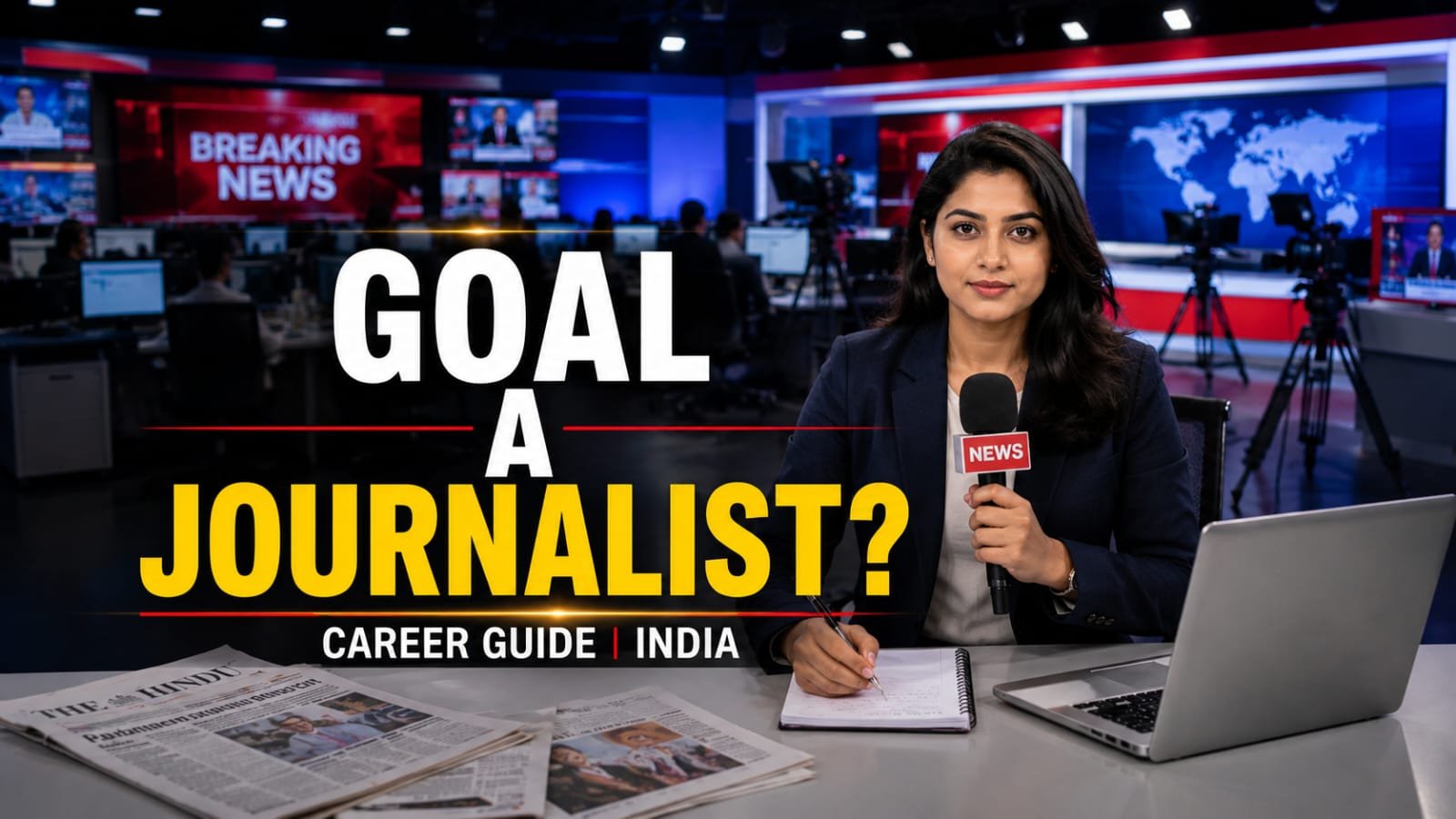
Becoming a journalist can be an interesting career option for students and graduates who enjoy writing, asking questions, researching information and understanding what is happening around them. Journalists work in newspapers, television channels, radio, digital news organisations, magazines and other media platforms.
Journalism is much more than writing news. A journalist may research a story, interview people, verify information, attend events, collect documents, report from the field, write articles, record videos or work with an editorial team.
This career guide explains what a journalist does, how to become a journalist in India, courses after 12th and graduation, eligibility, entrance exams, important skills, internships, first-job preparation, salary, career growth, government and private opportunities, challenges and the future of journalism.
What Is a Journalist?
A journalist is a professional who gathers, checks and communicates information about events, issues and developments to the public.
Journalists may cover subjects such as:
- Politics
- Government
- Education
- Business
- Agriculture
- Sports
- Technology
- Entertainment
- Health
- Environment
- Crime and law
- Local events
- Social issues
- International affairs
The work can be different depending on the type of media organisation and the journalist’s role.
A newspaper reporter may mainly write news stories. A television reporter may collect information, conduct interviews and prepare video reports. A digital journalist may work with written articles, photographs, videos, graphics and social media content.
The main responsibility is to provide information accurately and responsibly.
What Does a Journalist Do?
The daily work of a journalist depends on the job and organisation. Common responsibilities include the following.
Researching Stories
Journalists research subjects before preparing a report. They may examine documents, speak to people, attend events and collect information from reliable sources.
Gathering Information
Information can come from interviews, official statements, public events, documents, press conferences and direct observation.
Conducting Interviews
Journalists may interview government officials, experts, business representatives, witnesses, public figures and members of the public.
Verifying Information
Checking information is an important part of journalism. Journalists should not simply publish every claim they receive.
They may compare information from different sources and check documents before using important facts in a report.
Writing News Reports
Journalists write different types of content, including:
- News reports
- Interviews
- Features
- Explainers
- Special reports
- Background stories
- Local reports
Reporting From the Field
Reporters may travel to locations where an event is taking place. They may collect information, interview people and send their reports to the newsroom.
Working With Editors
Journalists often work with editors and other newsroom professionals. Editors may review stories for accuracy, clarity, structure and presentation.
Working With Digital Media
Modern journalism can involve photographs, videos, audio, social media updates and other digital formats.
Types of Journalism
Journalism has several areas in which a person can develop expertise.
Print Journalism
Print journalists work with newspapers, magazines and other publications.
Their work can include reporting, writing, interviewing and editing.
Television Journalism
Television journalists work on news programmes and video reports.
They may research stories, conduct interviews, report from locations and work with camera and production teams.
Radio Journalism
Radio journalists prepare news and other audio content.
Clear communication, good writing and audio production skills can be useful in this field.
Digital Journalism
Digital journalists work for online news websites and digital publications.
They may write articles and also work with photographs, video, graphics and social media.
Investigative Journalism
Investigative journalists spend considerable time researching complicated subjects. They may examine documents, records and different sources to develop a detailed report.
Political Journalism
Political journalists cover governments, political parties, elections, public policy and political developments.
Business Journalism
Business journalists cover companies, industries, banking, finance, markets and economic developments.
Sports Journalism
Sports journalists report on sports events, players, teams, competitions and related developments.
Agriculture and Rural Journalism
Journalists can specialise in subjects such as agriculture, farming, rural development, government schemes, livelihoods and rural communities.
This can be particularly useful for people who already have knowledge of agriculture or rural development.
How to Become a Journalist in India
There is no single compulsory route that every journalist must follow.
A common career path is:
Class 12 → Journalism or related degree → Skills → Internship → Portfolio → Entry-level job → Experience → Specialisation → Career growth
A graduate from another subject can also move into journalism through suitable postgraduate education or practical training.
A beginner can follow these steps:
- Complete Class 12.
- Choose a suitable undergraduate course.
- Study journalism, mass communication or another relevant subject.
- Develop writing and communication skills.
- Learn research and fact-checking methods.
- Learn useful digital media skills.
- Complete practical projects.
- Take internships where possible.
- Build a portfolio.
- Apply for entry-level journalism positions.
- Gain professional experience.
- Develop expertise in a particular subject or form of journalism.
The exact route can differ from person to person.
Can I Become a Journalist After 10th?
Class 10 alone is generally not the normal educational qualification for professional journalist positions.
Students who are interested in journalism after Class 10 can complete Class 11 and 12 and then pursue a suitable higher-education programme.
However, students can start developing journalism skills early.
They can:
- Read newspapers regularly.
- Follow important current affairs.
- Practise writing.
- Conduct simple interviews.
- Learn photography.
- Learn basic video recording.
- Learn basic editing.
- Practise researching information.
- Participate in school or college publications.
These activities can help build a foundation before entering professional journalism.
Can I Become a Journalist After 12th?
Yes.
After Class 12, students can consider undergraduate courses related to journalism and mass communication.
Possible courses include:
- Bachelor of Journalism
- Bachelor of Journalism and Mass Communication
- Bachelor of Mass Communication
- Bachelor of Arts in Journalism
- Bachelor of Arts in Mass Communication
- Other recognised media and communication programmes
Course names and admission requirements can vary between institutions.
Students should check the eligibility conditions of the particular institution before applying.
Can I Become a Journalist After Graduation?
Yes.
A person who has already completed graduation in another subject can also enter journalism.
Possible routes include:
- Postgraduate journalism programmes
- Mass communication programmes
- Postgraduate diplomas
- Journalism training programmes
- Practical media experience
- Internships
A different academic background can sometimes be useful when developing expertise in a particular subject.
For example, a graduate with knowledge of agriculture may develop a career in agriculture journalism. Someone with an economics or commerce background may be interested in business journalism.
A person with a science background may also develop expertise in science and technology reporting.
Educational Qualification for Journalism
There is no single educational qualification applicable to every journalism job.
A basic career pathway can look like this:
| Education Level | Possible Route | Purpose |
|---|---|---|
| Class 12 | Bachelor’s programme | Start higher education |
| Graduation | Journalism or mass communication programme | Gain specialised knowledge |
| Graduation in another subject | Postgraduate journalism programme | Enter journalism through a career-switch route |
| Any suitable qualification | Certificate or specialised training | Develop specific media skills |
The qualification required depends on the employer, course and position.
A particular journalist job may value education, experience, language ability, reporting skills or a combination of these.
Courses to Become a Journalist
Bachelor’s Degree
Students can consider undergraduate programmes in journalism, mass communication and related subjects.
Students may learn about:
- Reporting
- Writing
- Editing
- Communication
- Media law
- Media ethics
- Photography
- Audio production
- Video production
- Digital media
- Public relations
- News production
The syllabus varies by institution.
Master’s Degree
Graduates can consider postgraduate programmes in:
- Journalism
- Mass communication
- Media studies
- Communication
- Related media subjects
Postgraduate study can provide deeper knowledge and may help with specialisation.
Postgraduate Diploma
Graduates can also consider postgraduate diploma programmes in journalism and related fields.
These programmes can provide focused professional training.
Certificate Courses
Short-term courses can help develop specific skills such as:
- Digital journalism
- Mobile journalism
- Video journalism
- Photography
- Video editing
- Data journalism
- Fact-checking
- Digital publishing
A certificate does not guarantee a journalism job. Practical ability and professional experience also matter.
Journalism Eligibility
Eligibility varies depending on the course or job.
Possible requirements may include:
- Class 12 qualification
- Graduation
- Minimum marks
- Specific subjects
- Entrance examination
- Interview
- Language proficiency
- Age requirements for particular recruitment processes
There is no universal eligibility rule for every journalism position in India.
Students should check the latest admission or recruitment notification before applying.
Entrance Exams for Journalism
Not every journalism course requires an entrance examination.
Depending on the institution, admission may be based on:
- Merit
- Entrance examination
- Interview
- Institution-specific selection process
Some journalism and mass communication programmes may have their own entrance procedures.
Therefore, students should check the current admission rules of the institution they want to join.
For government or public-sector journalism-related positions, the recruitment notification should always be checked because eligibility and selection procedures can change.
Skills Required to Become a Journalist
A successful journalist needs more than a degree.
Writing Skills
A journalist should be able to explain information clearly and accurately.
Good writing helps readers understand complicated issues without unnecessary confusion.
Research Skills
Journalists often need to understand a subject quickly and identify reliable information.
Interviewing Skills
Journalists need to ask useful questions and listen carefully to answers.
Fact-Checking Skills
Important information should be verified before publication or broadcast.
Communication Skills
Journalists communicate with many different types of people, including officials, experts, colleagues and members of the public.
Critical Thinking
Journalists need to examine information carefully instead of accepting every claim without checking it.
Curiosity
Curiosity encourages journalists to ask additional questions and investigate important details.
Digital Skills
Digital journalism increasingly requires skills related to:
- Online publishing
- Social media
- Photography
- Video
- Audio
- Basic editing
- Digital research
Time Management
News organisations often operate under strict deadlines, so journalists need to manage their time effectively.
Language Skills
Strong language skills are essential. Knowledge of more than one language can also be useful, especially in India’s multilingual media environment.
How to Develop Journalism Skills
A beginner can start developing journalism skills without waiting for the first job.
Try to:
- Read newspapers regularly.
- Read different types of news reports.
- Compare how different publications report the same event.
- Practise writing short reports.
- Conduct interviews.
- Learn basic photography.
- Learn video recording.
- Learn basic video editing.
- Practise fact-checking.
- Participate in college publications.
- Create a portfolio.
- Complete practical projects.
- Follow important national and local issues.
Regular practice is more useful than simply collecting certificates.
Internships and Practical Experience
Internships can help students understand how journalism works in real situations.
An intern may learn:
- How stories are selected
- How reporters gather information
- How interviews are conducted
- How news reports are written
- How editors review content
- How deadlines work
- How digital stories are published
- How video and audio content is produced
Students should look for opportunities where they can actually learn and practise journalism.
An internship should not be viewed only as a certificate. The practical experience gained can be more valuable.
How to Get Your First Journalism Job
Getting the first job can take time, especially in competitive media markets.
A practical approach is:
1. Complete the required education
Choose a suitable degree, diploma or training route.
2. Develop practical skills
Practise reporting, writing, research, interviewing and digital media.
3. Create a portfolio
Keep your best work in one place.
Your portfolio may contain:
- News reports
- Articles
- Interviews
- Photographs
- Videos
- Features
- Explainers
4. Complete internships
Practical experience can help you understand newsroom work.
5. Apply for entry-level positions
Look at suitable openings in newspapers, television, radio, digital media and other media organisations.
6. Prepare for interviews
Be prepared to discuss your portfolio, current affairs knowledge and interest in journalism.
7. Continue learning
The media industry changes regularly, so learning should continue after getting a job.
Where Can a Journalist Work?
Journalists can work in:
- Newspapers
- Magazines
- Television channels
- Radio stations
- Digital news websites
- News agencies
- Regional media organisations
- Business publications
- Sports publications
- Specialised publications
- Multimedia organisations
Some journalists later move into related careers such as:
- Editing
- News production
- Media research
- Content production
- Communications
- Media management
Government Job Opportunities for Journalists
Government employment opportunities can exist in media, broadcasting, communication and information-related organisations.
Depending on the organisation and position, work may involve:
- Reporting
- Editing
- Broadcasting
- News production
- Communication
- Public information
- Media production
However, a journalism qualification does not automatically make a person eligible for every government job.
Government recruitment requirements can include specific qualifications, age limits, experience, examinations and selection procedures.
Candidates should always check the latest official recruitment notification before applying.
Private Sector Journalism Jobs
Private media organisations offer opportunities in several areas.
Potential employers include:
- Newspapers
- Television channels
- Digital news organisations
- Magazines
- News agencies
- Regional media organisations
- Specialised publications
Entry-level positions may involve:
- Reporting
- Desk work
- Digital journalism
- Content production
- Research
- Video journalism
Career growth depends on experience, skills, performance, specialisation and the organisation.
Freelance Journalism and Independent Work
Some journalists work independently.
Possible freelance activities include:
- Freelance reporting
- Feature writing
- Photography
- Video journalism
- Research
- Documentary work
- Specialised reporting
Freelance journalism can provide flexibility, but income may not be as predictable as a regular salaried position.
A freelancer usually needs strong communication, networking, portfolio-building and professional discipline.
Journalist Salary in India
There is no single salary applicable to all journalists in India.
Income can vary depending on:
- Experience
- Location
- Employer
- Job role
- Language
- Industry
- Organisation size
- Specialisation
- Digital skills
- Employment type
A beginner should be careful about websites or advertisements that promise a fixed high salary immediately after completing a journalism course.
Some entry-level positions may offer modest salaries, while experienced journalists, specialists and professionals in senior positions may earn more.
Freelance income can vary even more because it depends on assignments and clients.
Therefore, salary should be considered as one part of the career decision rather than the only reason to choose journalism.
Career Growth in Journalism
Career growth can follow different paths.
A possible progression is:
Intern → Trainee → Junior Journalist/Reporter → Reporter/Correspondent → Senior Journalist → Specialist/Senior Reporter → Editor or Editorial Leadership
This is only an example. Actual career paths differ between organisations.
With experience, journalists may specialise in areas such as:
- Politics
- Business
- Sports
- Technology
- Agriculture
- Science
- Education
- Health
- International affairs
Some may move into editing, production or media management.
Work Environment of a Journalist
Journalists may work in offices, newsrooms or in the field.
Depending on the role, the work may involve:
- Office work
- Field reporting
- Travel
- Interviews
- Press conferences
- Deadlines
- Evening or weekend work
- Breaking-news assignments
- Teamwork
- Public interaction
A journalist covering local events may have a very different working day from a journalist working on an international desk or digital newsroom.
People considering journalism should understand that the profession may not always have fixed working hours.
Advantages of Journalism as a Career
Some potential advantages include:
- Variety in daily work
- Opportunity to learn about different subjects
- Opportunity to meet different people
- Development of communication skills
- Scope for specialisation
- Opportunities in different media formats
- Possibility of working in regional languages
- Opportunity to report on important issues
- Potential to build an independent professional identity
The actual experience depends on the employer, role and type of journalism.
Challenges and Disadvantages
Journalism also has challenges that students should understand before entering the profession.
Deadline Pressure
News often needs to be prepared quickly.
Irregular Working Hours
Some journalists may work at night, on weekends or during holidays.
Competition
There can be strong competition for desirable positions.
Difficult Assignments
Field reporters may sometimes work in uncomfortable or stressful conditions.
Continuous Learning
Journalists need to keep learning about new subjects, technology and media formats.
Income Variation
Salary and freelance income can vary significantly.
Pressure of Accuracy
Mistakes can affect a journalist’s professional credibility.
Emotional Difficulty
Reporting accidents, disasters, conflict or other difficult events can be emotionally demanding.
Who Is Suitable for Journalism?
Journalism may suit people who:
- Are curious
- Enjoy reading
- Like writing
- Enjoy asking questions
- Like meeting people
- Can communicate clearly
- Are interested in current affairs
- Can work under deadlines
- Are willing to verify information
- Can handle criticism
- Are willing to continue learning
You do not have to be an expert writer when you start. Writing and reporting skills can improve with practice.
Who May Not Be Suitable for Journalism?
Journalism may be difficult for someone who strongly dislikes:
- Writing
- Research
- Talking to people
- Deadlines
- Unpredictable schedules
- Continuous learning
- Public interaction
This does not mean such people cannot work in the media industry. They may simply prefer other media careers such as technical production, design or specialised support roles.
Common Mistakes Beginners Make
Choosing Journalism Only Because It Looks Exciting
The actual work includes research, verification, writing, editing and deadlines.
Believing Salary Promises
No journalism course can guarantee a particular salary.
Ignoring Practical Skills
Employers may value what you can actually do, not just the qualification you hold.
Not Building a Portfolio
A portfolio helps demonstrate your abilities.
Copying News
Journalism requires responsible reporting and verification.
Ignoring Accuracy
Incorrect information can damage professional credibility.
Following Trends Blindly
A person should understand the actual work before choosing journalism as a career.
Not Checking Official Information
Course and recruitment requirements can change.
Stopping Learning After Graduation
Journalism continues to evolve, especially because of digital technology.
How to Start Journalism From Zero
Someone with no experience can start gradually.
Stage 1: Improve Reading
Read newspapers and reliable news sources regularly.
Stage 2: Improve Writing
Write short reports about events and issues around you.
Stage 3: Learn Research
Practise finding and comparing reliable information.
Stage 4: Learn Interviewing
Talk to people and practise asking clear, relevant questions.
Stage 5: Learn Digital Skills
Learn basic photography, video recording, audio and editing.
Stage 6: Build a Portfolio
Save your best work.
Stage 7: Gain Experience
Look for internships, student publications, practical projects or entry-level opportunities.
Stage 8: Apply for Jobs
Apply for suitable journalism roles based on your skills and qualifications.
Stage 9: Develop Expertise
Choose subjects that interest you and gradually build specialist knowledge.
Example Career Roadmap
One possible roadmap is:
Class 10 → Class 12 → Bachelor’s Degree → Journalism Training → Skills → Internship → Portfolio → First Job → Experience → Specialisation → Senior Position
Another possible route is:
Class 12 → Bachelor’s Degree in Another Subject → Postgraduate Journalism Course → Internship → Entry-Level Job → Specialisation
These are examples only. People can enter journalism through different routes.
Cost of Becoming a Journalist
The total cost depends on the education and training route.
Possible expenses include:
- College fees
- Course fees
- Examination fees
- Books
- Laptop or computer
- Camera or mobile equipment
- Travel
- Training
- Software
- Other professional expenses
There is no fixed amount that applies to everyone.
Government institutions, public universities, private colleges and short-term training providers can have significantly different fee structures.
Students should compare course quality, practical training, total cost and career relevance before choosing a programme.
Is Journalism a Good Career in India?
Journalism can be a good career for people who genuinely enjoy reporting, research, communication and current affairs.
However, it is not suitable for everyone.
Before choosing this profession, ask yourself:
- Do I enjoy writing?
- Do I like learning about new subjects?
- Am I comfortable asking questions?
- Can I communicate with different people?
- Can I work under deadlines?
- Am I willing to verify information?
- Can I handle criticism?
- Am I comfortable with competition?
- Am I interested in digital media?
If you enjoy these activities, journalism may be worth considering.
The career should be chosen because the work interests you, not simply because you expect a high salary or a glamorous job.
Future of Journalism in India
Journalism is changing because of digital technology, smartphones, artificial intelligence, social media and online publishing.
Some important developments include:
- Digital news
- Mobile journalism
- Video journalism
- Data journalism
- Artificial intelligence tools
- Automated content processes
- Digital fact-checking
- Multimedia storytelling
- Social media distribution
AI may help journalists with certain tasks such as transcription, translation, research assistance and content organisation.
However, journalism still requires human judgement. Journalists need to understand context, evaluate sources, verify information, conduct interviews and make editorial decisions.
Because of this, future journalists may benefit from combining traditional reporting skills with digital and technology skills.
Related Career Options
If you are interested in journalism but do not want to become a traditional reporter, consider these related careers.
Editor
Editors review and improve content before publication.
Content Writer
Content writers create written material for websites, businesses and other organisations.
Video Journalist
Video journalists combine reporting with video production.
News Producer
News producers help organise and prepare news programmes.
Copy Editor
Copy editors focus on language, accuracy, structure and readability.
Media Researcher
Media researchers collect and analyse information for journalism and media production.
Public Relations Professional
PR professionals work on communication between organisations and the public or media.
Journalism Institutes and Courses in India
| Institute | Journalism / Media Course | Official Link |
|---|---|---|
| Indian Institute of Mass Communication (IIMC) | PG Diploma in Journalism, Digital Media and other media programmes | IIMC Official Courses |
| Jamia Millia Islamia – AJK Mass Communication Research Centre | M.A. Convergent Journalism, M.A. Mass Communication and other media programmes | AJK MCRC Official Courses |
| University of Delhi | B.A. (Hons.) Journalism | University of Delhi – Journalism |
| Makhanlal Chaturvedi National University of Journalism and Communication | Journalism, Mass Communication and media programmes | MCU Official Website |
Frequently Asked Questions
How can I become a journalist after 12th?
You can pursue a bachelor’s degree in journalism, mass communication or a related field, develop practical skills, complete internships and build a portfolio.
Is a journalism degree compulsory?
Not every journalism job has exactly the same qualification requirements. Employers may consider education, experience, skills and the specific role.
Can I become a journalist after graduation in another subject?
Yes. Graduates can consider postgraduate journalism programmes, diplomas, training and practical experience.
Is an entrance exam compulsory for journalism?
No. Entrance requirements depend on the institution and programme.
Can I become a journalist after Class 10?
Class 10 alone is generally not the normal qualification for professional journalism jobs. Completing Class 12 and then pursuing higher education is the more common route.
What skills are required for journalism?
Important skills include writing, research, interviewing, fact-checking, communication, critical thinking, time management and digital media skills.
Where can journalists work?
Journalists can work in newspapers, television, radio, digital news organisations, magazines, news agencies and other media organisations.
Are government jobs available for journalists?
Government and public-sector opportunities may be available in media and communication-related organisations. Eligibility depends on the specific recruitment notification.
What is the starting salary of a journalist?
There is no universal starting salary. It depends on the employer, location, role, experience and other factors.
Can I become a journalist without studying journalism?
Some journalism roles may not require a specific journalism degree, but professional training, practical skills and relevant experience can be valuable.
Do journalists have to appear on television?
No. Many journalists work in newspapers, digital newsrooms, radio, editing, research and other roles without appearing on television.
Can journalists work independently?
Yes. Some journalists work as freelancers or independent media professionals, although income can be less predictable.
Is journalism suitable for students from different streams?
Many journalism programmes accept students from different academic backgrounds, but eligibility depends on the particular institution.
Is English compulsory for journalism?
It depends on the language in which you work. Strong language skills are essential in whichever language you choose for journalism.
Will AI replace journalists?
AI may automate or assist with some journalism tasks, but reporting also requires human judgement, verification, interviews, context and editorial responsibility. Learning both journalism and digital technology can help professionals adapt.
Final Thoughts
Journalism is a career built around information, communication, research and public responsibility. A journalist may spend one day reporting from the field and another day researching and writing a detailed story.
There is no single route into journalism. Students can enter through journalism or mass communication courses after Class 12, while graduates from other subjects can consider postgraduate education and practical training.
The most important preparation is not only obtaining a qualification. It is developing the ability to research, ask questions, verify information, write clearly and work responsibly under deadlines.
If you are interested in becoming a journalist, start developing these skills early. Read regularly, practise writing, learn digital media tools, gain practical experience and build a portfolio.
Journalism can offer a meaningful career, but it also comes with competition, deadlines, irregular working hours and income differences. Understanding both the opportunities and challenges will help you decide whether this profession is right for you.
Posts You Might Be Interested:-
- India Post GDS Recruitment 2026: BPM, ABPM and Dak Sevak Eligibility, Salary, Selection and Apply Online
- SBI Clerk Recruitment 2026 | 7680 Vacancies, Eligibility, Salary, Exam Pattern and Apply Online

- IOCL Apprentice Recruitment 2026
- Latest SBI PO Recruitment 2026 | 1500 Vacancies, Eligibility, Salary & Exam Pattern
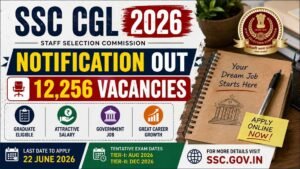
- SSC CGL Recruitment 2026
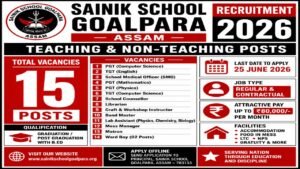
- Sainik School Goalpara Recruitment 2026 – 17 Posts, Eligibility, Salary and Application Details
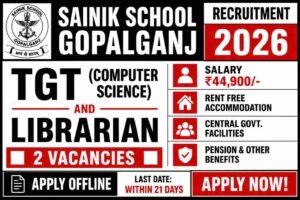
- Sainik School Gopalganj Recruitment 2026 – TGT Computer Science and Librarian Posts, Eligibility and Salary
- IIA Recruitment 2026 – Upper Division Clerk 5 Posts, Eligibility, Salary, Selection Process